Planning flatbed hire in Stoke On Trent
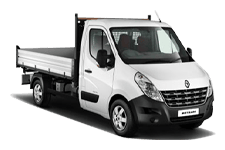
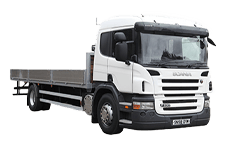
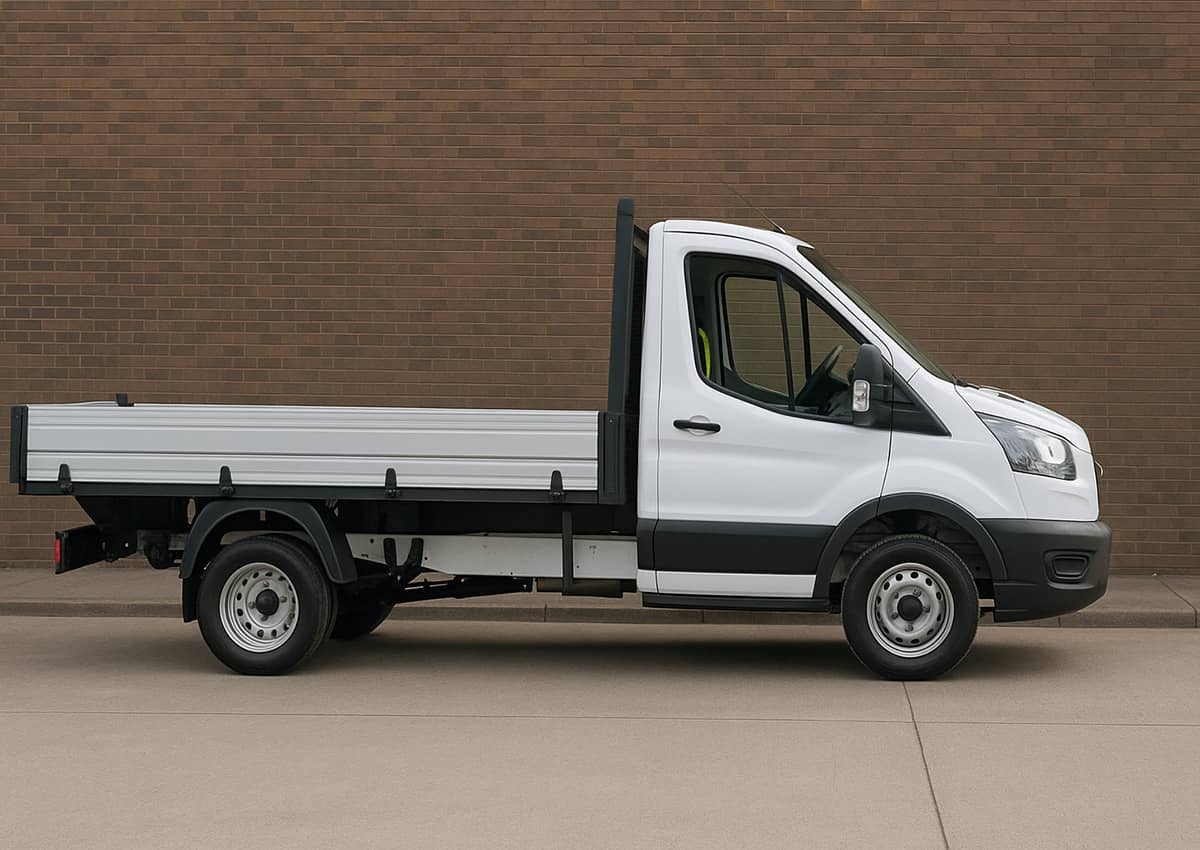
A dropside or flatbed suits loads that are awkward inside a box van: lengths of timber, fence panels, bagged aggregate on pallets, pipe or a small piece of plant. The folding sides let you load from the rear or along the length of the bed. That matters when a forklift, a telehandler or two people carrying boards need to reach the middle of the deck. Private customers use them for garden and renovation jobs, trades for merchant runs and businesses for site supply.
Most open-bed hires involve two places with very different problems. You usually collect from a yard or merchant with room to manoeuvre. The drop is often a terrace, a shop front or a town-centre street where stopping is restricted. Plan the two ends separately. The sections below cover choosing a vehicle size, the difference between licence limits and payload, how to restrain an open load, and what to check before you arrive at either end.
Collecting from a merchant yard at Pit Lane
If you are collecting materials from a builders' merchant, work from the exact collection address rather than the town name. Jewson lists its Pit Lane branch at Jamage Industrial Estate, Pit Lane, Stoke-on-Trent, ST7 1XW. That postcode sits outside central Hanley, so treat the collection run and the unloading plan at your destination as two separate pieces of work.
The published address tells you where to go, not what will be waiting. It does not confirm that your order is in stock, that a forklift will load the bed, or which gate an open-bed vehicle should use. The checklist further down sets out what to ask before you travel.
Choosing between 3 metre, 4 metre, tail-lift and 7.5 tonne dropsides
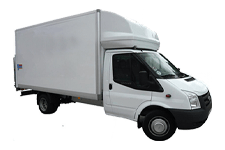
Start with the load, not the vehicle. Measure the longest item, count the pallets and note their footprint, then estimate the total weight including pallets and packaging. A 3 metre dropside is a compact choice for boards, fencing and bagged materials where a narrow street or tight drive rules out anything bigger. A 4 metre bed gives extra length for timber, pipe and several pallets, and side loading is easier along the longer deck.
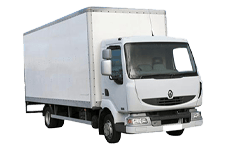
A dropside with a tail lift is worth asking about if you will be unloading heavy pallets or wheeled kit with no forklift at the destination. A 7.5 tonne dropside lorry suits multi-pallet loads, scaffolding and larger machinery. However, it needs a driver with the right licence entitlement, and both the route and the drop must be able to take a lorry. All bed sizes and published payload figures are only typical examples, so confirm the dimensions and payload of the vehicle you are actually given before you commit.
Sources: Nationwide Hire UK: 3 metre dropside, Nationwide Hire UK: 4 metre dropside, Nationwide Hire UK: dropside with tail lift, Nationwide Hire UK: 7.5 tonne dropside
Licence entitlement, gross weight and payload are different numbers
A standard category B car licence generally covers vehicles up to 3.5 tonnes maximum authorised mass. Above 3.5 tonnes and up to 7.5 tonnes you normally need category C1. Check the categories shown on each driver's own licence, and expect the hire provider to set its own age and experience conditions on top.
Maximum authorised mass, also called gross vehicle weight, is the most the loaded vehicle is allowed to weigh, and it is normally shown on the plate or sticker. Payload is what remains after the weight of the vehicle, fuel, driver and passengers, so a 3.5 tonne van cannot carry 3.5 tonnes of cargo. Add up the goods, pallets and packaging. Remember that axle loads change as you drop items off, and use a weighbridge if you are unsure.
Sources: GOV.UK: driving licence categories, GOV.UK: vehicle weights explained, DVSA: HGV overloading basics
Restraining an open load and loading from the side
An open bed is easy to load but has no walls to stop a shifting load. Official guidance is clear that weight and friction alone will not hold goods in place, and that the securing method has to suit both the load and the vehicle. Before loading, inspect the platform, sides, headboard and anchor points, and confirm how many rated lashing points your vehicle has. Rope hooks for sheeting are not restraint anchors.
Load heavy items low and forward against the headboard, and spread the weight so that neither the gross limit nor any axle limit is exceeded. Use straps rated for the load, with edge protectors on sharp corners. Friction matting and chocks help with pallets and round items. Loading from the side means lowering a side panel, so keep people clear of its swing and re-latch every side before you move off. Check the restraint again during the journey, because loads can settle.
Long timber or pipe that sticks out beyond the front, rear or sides may need marking, and larger overhangs can require advance notice to the authorities. Measure the actual overhang and check the current official guidance before you travel. Do not assume a longer bed will solve the problem.
Sources: DVSA: securing loads on HGVs and goods vehicles, DVSA: load securing basics, DVSA: ways to secure a load, DVSA and DfT: overhanging loads on vehicles
Planning a drop near Broad Street in Hanley
Town-centre deliveries are where many open-bed hires go wrong. In June 2025 Stoke-on-Trent City Council announced a red route on Broad Street, Hanley, between Potteries Way and Victoria Square, replacing double yellow lines with double red markings, new signage and cameras. If your drop is on or near that stretch, do not rely on the old yellow-line arrangements.
Treat the announcement as a prompt to check, not a statement of today's rules. Look at the current signs before hire day and find out whether a loading bay or time window applies. The council's parking services team handles on-street controls and enforcement but has no drop-in service, so raise questions online or by phone well in advance.
Sources: Stoke-on-Trent Council: Broad Street red-route announcement, Stoke-on-Trent Council: parking services
Unloading safely at the destination
Treat these as three separate questions: how big and heavy the load is, how it is held on the bed, and how it will come off at the other end. The destination may have no forklift, a sloping drive or a pavement shared with pedestrians. Agree in advance who will unload and with what equipment. Choose a stopping point that is as level and stable as possible, with space to lower a side safely.
A tail lift helps with pallets and wheeled equipment, but its rated capacity is not the same as the vehicle's payload. Confirm both figures, the platform size and whether a pallet truck can run on the unloading surface. Keep the area clear of people and never stand under a load being lowered. Only release the straps once you are sure nothing has shifted against a side panel during the journey.
Sources: HSE: safe loading and unloading, Nationwide Hire UK: dropside with tail lift
What to confirm with the hire supplier
A dropside's advantages, such as side access, a long bed and no door to squeeze goods through, only help if the booking terms suit your job. Before paying, ask the supplier for the plated weight, payload, bed dimensions and anchor points of the vehicle you will get, and whether straps are included. Ask how damage, fuel, mileage, the excess and any deposit are handled, and which driver ages and licence histories are accepted.
Published terms from any hire company only show you the kind of questions worth asking. Your signed contract is what governs the hire. For business use, check whether commercial insurance or operator requirements apply, especially for 7.5 tonne vehicles. At collection, keep a copy of the licence check and the vehicle condition report.
Sources: Third-party reference: Nationwide Hire UK terms and conditions, GOV.UK: driving licence categories